


Red Cliff Part I & II International Version Review
John Woo’s Magnum Opus
By Paladin of Justice
Story By: John Woo, Khan Chan, and Cheng Kuo
Directed By: John Woo
Release Date: 10 July 2008 (Part I) & 7 January 2009 (Part II)
💿Recommended Physical Media: Red Cliff Part I & II International Version Blu-Ray
Image Disclaimer: All film stills and promotional assets featured in this review belong to Magnet Releasing, Lionheart America, and China Film Group. They are used here under Fair Use for commentary, educational, and editorial critique purposes.
Overview
Set in China during the waning years of the Han Dynasty in 208 AD, the film follows the Three Kingdoms period. Prime Minister Cao Cao controls the emperor as a puppet, using the imperial army to fuel his own ambitions. He starts a war to destroy rival warlords Liu Bei and Sun Quan. An alliance is formed to stand against Cao Cao and restore peace to the land.
Cinematography & Visuals
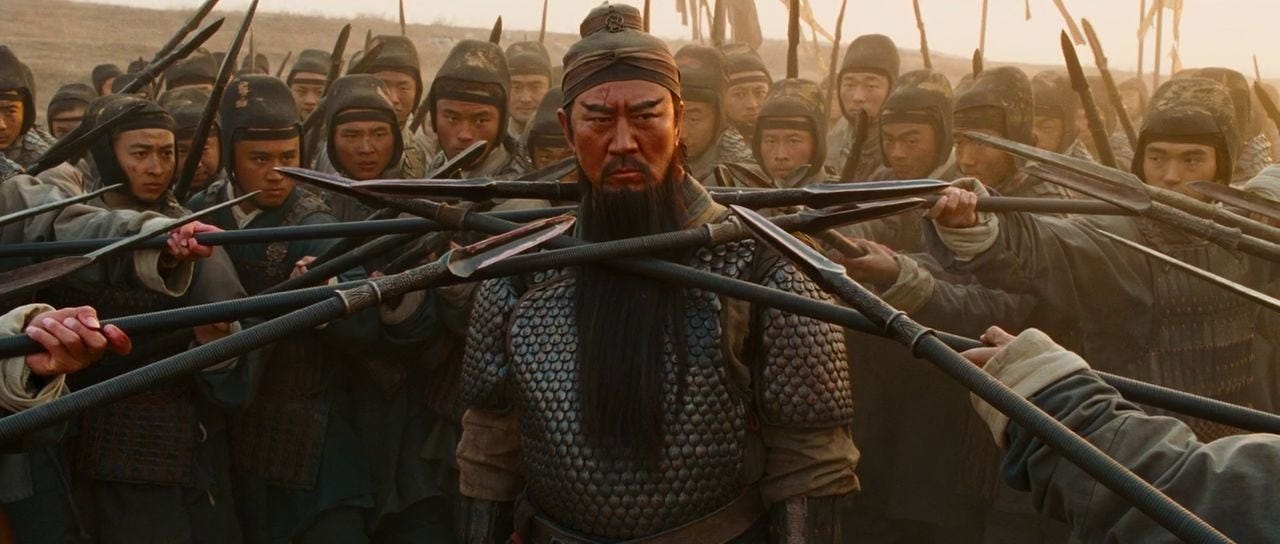
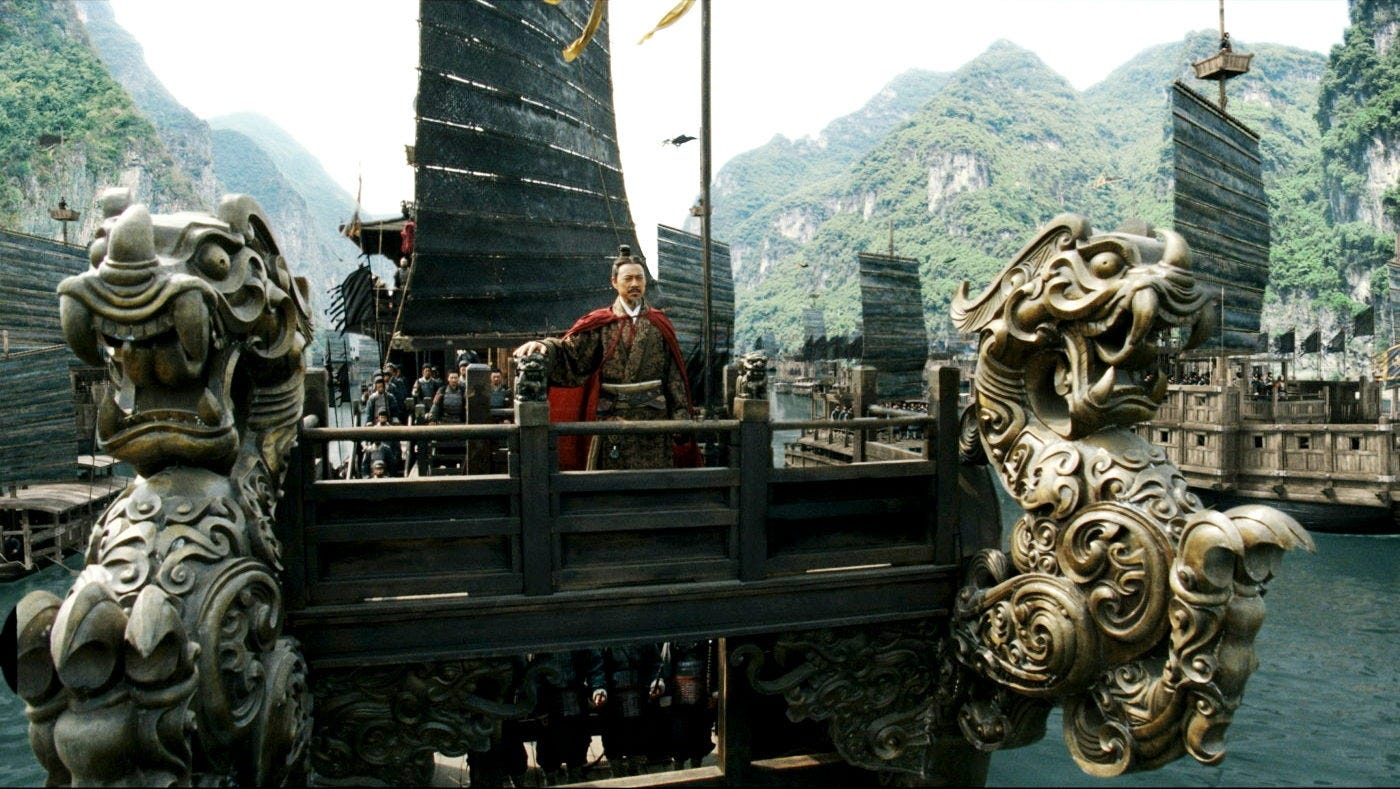
The cinematography is stunning. John Woo, known for popularizing the “gun fu” subgenre of Hong Kong action films, knocked this category out of the park. From the scenery to the battle formations and the costumes, everything looks like it came from ancient China. The sheer scale of the battles is truly remarkable, and while the CGI falters during some scenes, as a whole, this is a minor hiccup.
Direction & Pacing
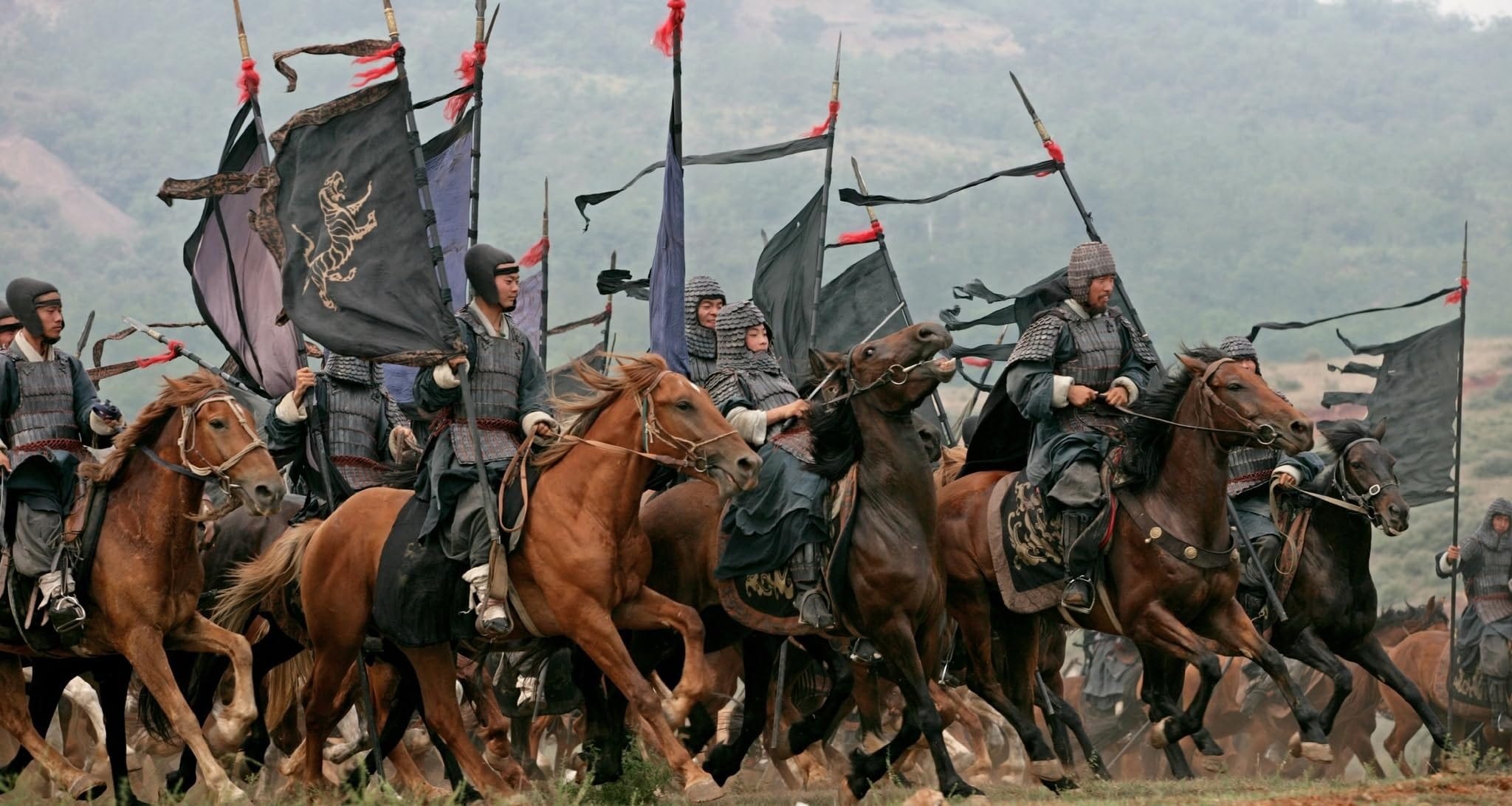
The international version comes in two parts with a combined runtime of 288 minutes. A plethora of exciting action sequences and rich character development keep the story on track. From a direction perspective, this is clearly John Woo’s best work.
Screenplay & Story
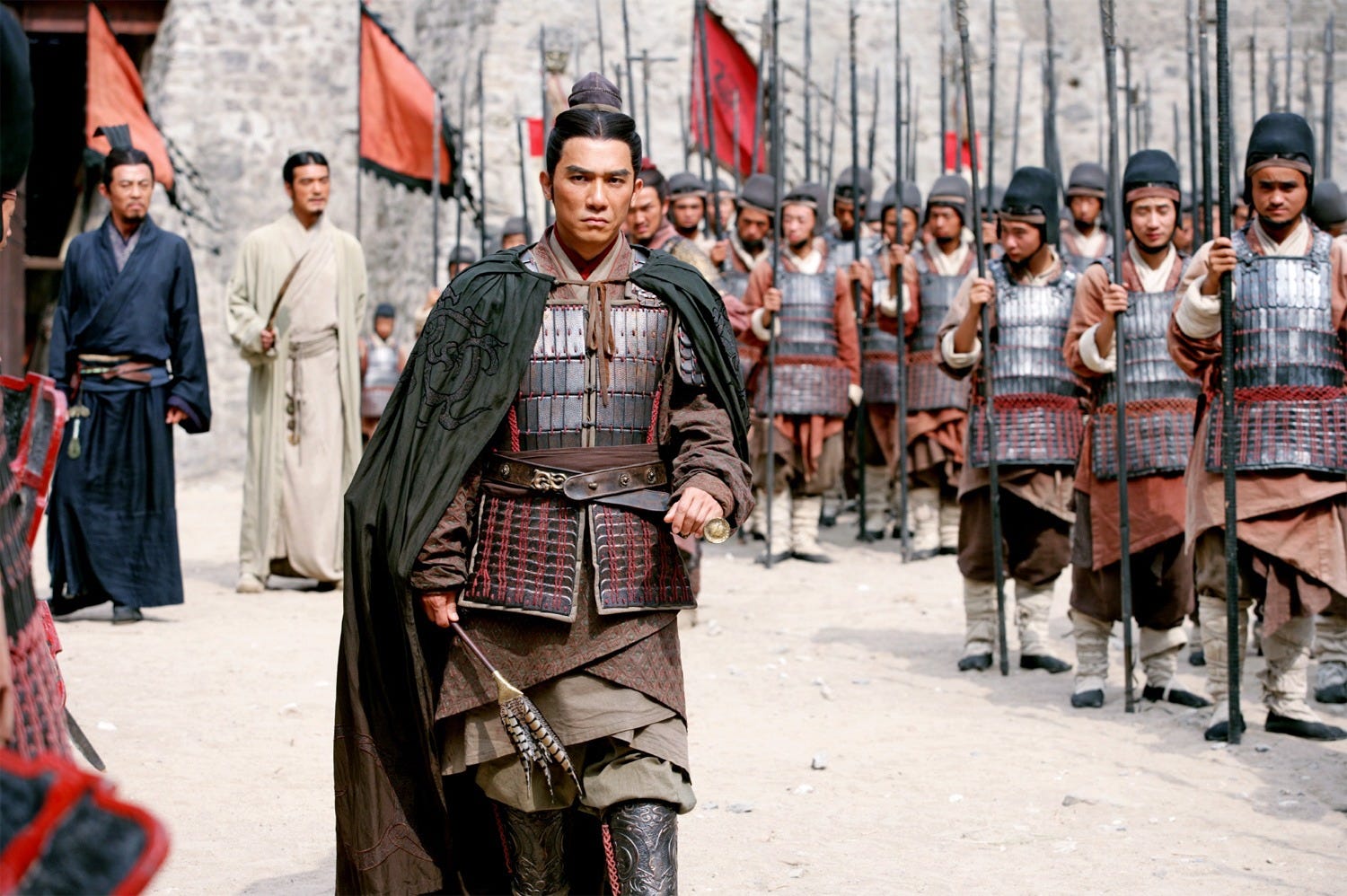
The film is loosely based on Luo Guanzhong’s 14th-century novel Romance of the Three Kingdoms, but John Woo and his fellow writers make deliberate changes to ground the epic, most notably stripping away supernatural magic in favor of human strategy. The story kicks off early in Part I as Liu Bei’s forces narrowly escape Cao Cao’s overwhelming army at Changban. Desperate, Liu Bei dispatches his strategist, Zhuge Liang, to Sun Quan’s territory to ally. Beyond the looming threat of Cao Cao’s massive army, the screenplay excels in its character dynamics, from the unbreakable bond formed between Zhuge Liang and Zhou Yu to the fierce loyalty shared between Liu Bei and his sworn brothers, Guan Yu and Zhang Fei. The writing is strong here.
Audio & Score
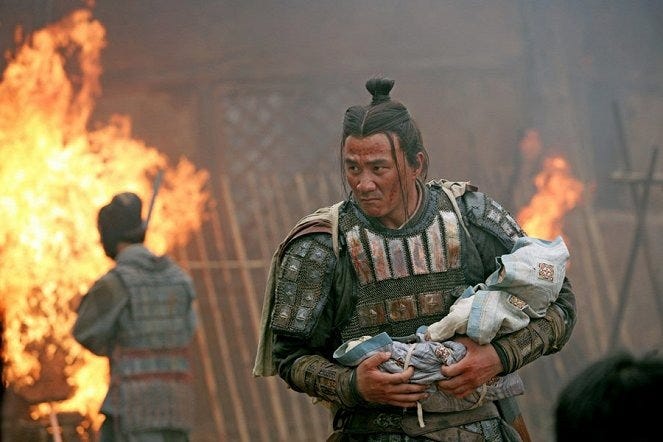
Another remarkable high point: the audio and score are arguably the best. Battles feel like you are actually on the battlefield. The music sounds like it could have come straight from the Romance of the Three Kingdoms video game series, and it is beyond pleasant.
Characters & Performances
The drama, subplots, and character development earn exceptionally high marks. Fengyi Zhang’s Cao Cao is a menacing villain and commands a strong screen presence. Zhou Yu (Tony Leung) and Zhuge Liang (Takeshi Kaneshiro) have legendary on-screen chemistry, and it is a real treat to see popular characters from the Romance of the Three Kingdoms & Dynasty Warriors video games come alive. Overall, the characters are believable and well-liked.
Pros & Cons
Pros
Outstanding Visuals: Absolutely stunning with great color grading. The sheer scale is mind-blowing at times.
An Epic Story: While not a pure adaptation of the Romance of the Three Kingdoms novel, the more grounded approach makes the story more believable.
Sharp Direction: Easily John Woo’s best work; everything ties together nicely.
Outstanding Audio: Battles come alive, and Taro Iwashiro’s score seamlessly blends traditional Chinese instruments with sweeping orchestral themes.
Brilliant Characters with Top-Notch Acting: The acting sets an extremely high bar, and every character has their own scene (or multiple scenes) where they shine. Although certain characters were changed, the result is stellar.
Cons
Runtime: A nearly 5-hour total runtime can be overwhelming for some.
The CGI is a mixed bag: Some scenes look spectacular while others are underwhelming.
Verdict & Paladin Index:
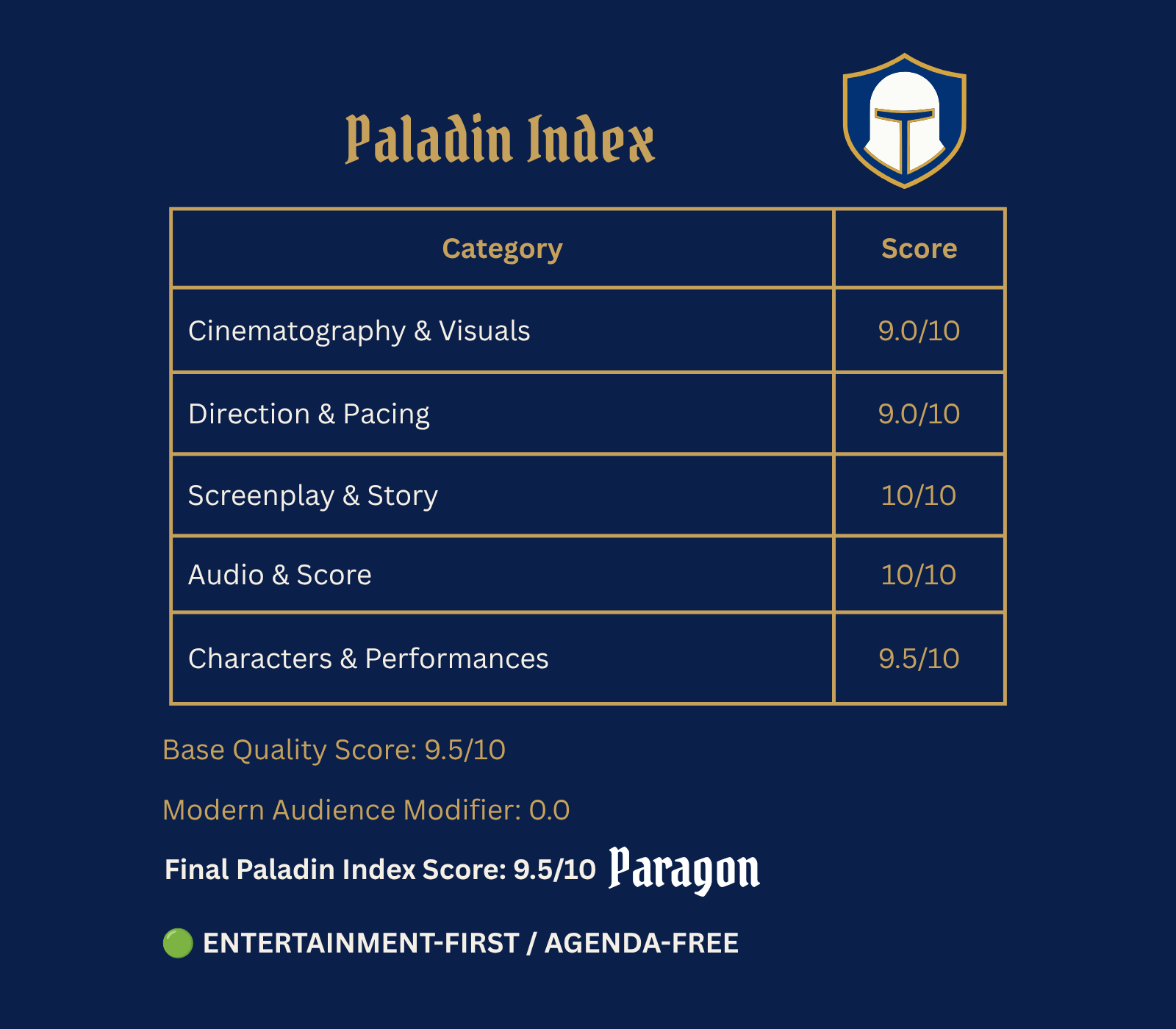
Red Cliff (the Battle of Chibi to Dynasty Warriors fans) is clearly John Woo’s magnum opus. In terms of Asian historical cinema, I would put it up alongside giants such as Akira Kurosawa’s Ran and Zhang Yimou’s Hero; it is that great. Unfortunately, it received a lukewarm reception in the West, with most of the film’s criticism undoubtedly aimed at the film’s theatrical version, which greatly hindered the story, character development, and pacing (makes sense since nearly 2 and a half hours were cut). Viewed in its entirety, the film is beyond excellent, with a great plot, superb characters, excellent visuals, epic action sequences, and a brilliant score. If you are a fan of the Romance of the Three Kingdoms, it doesn’t get any better than this. While minor issues like the colossal runtime and inconsistent CGI exist, they don’t hurt the overall quality of the film. Red Cliff is the modern benchmark, and no director before or since has managed battle strategy, military logistics, and grand-scale troop movement with this level of clarity and tactical elegance. It is an absolute must-watch and Blu-ray purchase.